Dealing With Deadlines

Deadlines are a crucial part of writing. Articles, proposals, rewrites, craft projects, short stories, etc. will need to be in the hands of your editor or publisher by certain dates. It’s rare for an editor to tell you, “Oh…take your time.” In the publishing industry, time is money. If you’re serious about writing, you will need to be on top of your deadlines.

As long as you constantly work on your piece, you don’t have to worry a lot about single projects. But it becomes challenging when you have two, three, or even four deadlines looming in the future.

The secret to meeting due dates is time management. You must plot out each project, making sure you give yourself enough time to tackle research, rough drafts, and rewrites. Say, for example, you have a book proposal that is due in three months. Print out monthly calendars for that time frame and calculate approximately how many days/weeks you need to find resources and research the information. Mark the calendar with those dates.

Next, figure out how many days/weeks you need to outline and then write up a rough draft, again allowing time for additional research. Also allow for editing the roughs and compiling a final draft. Mark everything onto the calendar. You can schedule other projects, too, like a magazine article or a chapter for a fiction novel, color-coding them so you can see at a glance if you’re on track.

Set up your weekly schedule to include research and writing time each day, allowing for appointments and other commitments. Give yourself breaks throughout so you won’t suffer from burnout.

Managing your time effectively is the key to dealing with deadlines. Make sure you plan appropriately so you can meet with success.

ALA Conference

This past Saturday three of my fellow critique group members and I visited the exhibit booths at the ALA Conference. Although none of us are librarians, we felt this would be a beneficial field trip from a writer’s perspective since we could see the books coming out in the fall for many big and little publishing houses. It was also an excellent way to meet valuable contacts that we may not otherwise have gotten to know.

This was my first time visiting such an event for this industry. The last time I went to anything even remotely similar was almost 20 years ago when I was involved in the film industry.

To be honest, I was a bit nervous. I didn’t know what to expect or how to approach any of the people in the booths. Thankfully we had our veteran author and friend, Nancy I. Sanders, with us. She skillfully and confidently walked up to people, introduced us as members of a local writer’s group, and then proceeded to ask about their line of books. This led to talks about their needs (or lack thereof), and about their submission policies. We met sales reps, editorial staff, and publishers. There are even a few houses who I will definitely contact with an idea in the next few weeks.

Conferences are a great way to see the needs of an industry. Even if you just visit the exhibits like we did, you will walk away with a better understanding of the market, and perhaps a few leads that you would never have gotten through e-mail or snail mail. That one-on-one contact makes a world of difference.

Beneficial Breakdowns

I am currently working on a proposal for a non-fiction children’s book for my current publisher. Before I delve into the actual research, I need to intensely study the publisher’s format for this type of book. Here are some tips on how to do a beneficial breakdown.


·   Pick 2 to 3 books from the publisher’s list that fit the same genre. In my case I asked my editor what books she would recommend that were similar in style.

·   Take notes on each book. Look at the total number of pages. Count the words in a full page of text to determine the average word count per page.

·   If there is a table of contents, note any prefaces, introductions, number of chapters, indexes, and bibliographies. Write the total number of pages for each section. Multiply the number of pages within a section by the average word count per page to determine the word count for that section. This will help determine how best to breakdown your chapters.

·   Read through the book, noting style and format.

·   Note the number of illustrations (if any) per chapter.


Once you have finished reading and taking notes of all the books, analyze your information. Pay close attention to any similarities because these will be the techniques you will need to apply to your outline and sample chapters for your proposal.


Book breakdowns are necessary in understanding the style and format of your publisher. Taking the time to study  will greatly improve your chances for success.

Writing Exercise #2

Do you have writer’s block? Kick start your creative brain by picture. Pull out an old magazine or select one from your library’s periodical section. Flip through the pages and pick a picture that captures your eye. Then start writing. Don’t take the time to create character names or plan out intricate plot twists. Just sit down and let the story flow from the picture. You might be amazed at what develops.

University Plus

My local library has been very good for resources, but limited for the amount of research I need to do for the various articles I write and the background information I need. Thankfully I live in an area where several colleges and universities are within ten to twenty miles from me. Their libraries are stocked with a variety of materials that are a researcher’s dream: books, magazines, databases, archives, journals, law books, etc.

Because I am not an alumni, I have to pay a yearly fee to borrow books at the school I decided to use. I cannot do inter-library loans from other universities to this one, and I cannot use their databases from home; but I feel it is worth the cost and the travel time to get items that I would not have access to otherwise.

The loan period is 28 days for a maximum of ten books, which gives me plenty of time to peruse the volumes I need.

Will this help with all my research? No, but it is a healthy start. Depending on my budget, I may even add another university later on down the line so I can even have a broader amount of resources. And if I find that funds are limited, I can still visit the other libraries and do some good in-house research without having to borrow any materials.

Why don’t you give your local university a try? You may just find that extra research information you’ve been looking for.

Business Cards

I just received my brand new box of business cards. Since my book won’t be out until the Fall of 2009, I had hesitated before. But when I read a recent blog post by a published author that it was a good idea to have some, I decided to take the plunge.     

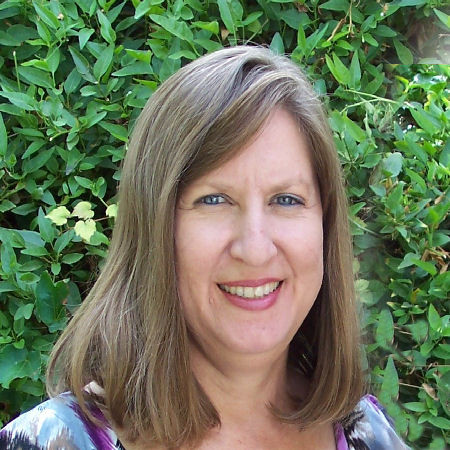
I used an online printer and spent a good two hours checking out the various backgrounds. The blog had suggested putting your picture onto the front of the card to give publishers and editors a face to remember after conferences. Because my picture had a greenish background, I needed to make sure that any design I chose would complement the photo.

After I found a background design, I worked on the placement of the photo and my name for the front of the card. Then I worked on the back of the card, choosing the same background with a darker color, and then setting up my name and contact information. I made sure I had enough blank space on the back to jot down notes (and for all those future autographs I may one day be signing). I was very satisfied with the results and I had fun along the way.

Of course I was a little concerned on how the final product would look. Designing something online doesn’t guarantee it will come out as nice and polished as it looks on my monitor. But I do have to say they did a great job. I was very pleased.

With today’s modern technology business cards are inexpensive and just a few clicks away. If you are serious about your writing career, it’s a good idea to get some. You can use them to promote school visits, to hand out to editors and publishers at conferences and seminars, to give to fellow writers, and to advertise your blog and/or website. It’s well worth the time and money.

Here’s to OneNote

I have just found a very helpful tool that is useful in organizing my research. It is Microsoft’s OneNote program. Basically I can create my own notebooks for any project, meeting, etc. with its own detailed information. I can download images off the internet or from my computer files, transfer notes into Microsoft Word, record and videotape conversations of a meeting, and set up a multi-tabbed filing system, among other things.           

When I usually research a topic, I start with a legal pad of paper, write the book information on the top of the page, and begin jotting notes as I read. I make sure to include the page number for reference next to each note so I can refer to it later. When I’m done with a book, I will staple the note pages together, and then go on to the next book.           

As you can imagine, I accumulate quite a pile of notes by the time my research is completed. Then I sort and reorganize my data so I can work on my rough drafts. What I needed was a better way to get my information straight onto my computer so I could organize everything more efficiently.           

I found OneNote by accident. It came with my Microsoft Office software. I had heard about it before on one of my group lists, but I never seriously looked into it until recently. After I took the “tour” and walked through all the features, I realized I could utilize this on my new projects.            

In OneNote you create your own project notebook with tabs for sections of data. For my research notebook, I created a to do table to schedule researching and due dates, a communications section to note e-mails and other interactions with my publisher, an outline for my project, and sections divided into chapter headings so I can make topic-related notes directly into its proper chapter. I will list my bibliography in another section, having pre-coded each book so I can tag my notes throughout with its source information. This becomes helpful when making sure you have the proper number of sources for any particular fact.           

I can type directly into OneNote instead of writing out by longhand and then retyping my notes. This saves valuable time. Of course it helps that I now have a laptop so I can make anyplace a workstation.           

I am very pleased with my new research tool. Of course, with such emphasis on my laptop, I will need to make sure I back up my files. Although OneNote saves automatically, I wouldn’t want such valuable information, along with my time and energy, to be wasted because of a technological accident.

If you get Microsoft Office, make sure you give OneNote a try. You may find it as resourceful as I do.

Writing Exercise #1

Sometimes it is difficult to find things to write about. We need something to stimulate our brain. Every so often I will be posting a writing exercise to help your creative process.

Exercise #1

Imagine you are a ten year old who just found an old hat box up in Grandma’s attic. You open the box, but find something completely unexpected. Write a five paragraph story of what you found.

Tools of the Trade

In days gone by a writer could get by with a stack of parchment paper and finely sharpened quill pens to create and market his craft. Today a handwritten manuscript would immediately be tossed in the trash by any editor or publisher. If you want to be taken seriously in the art of writing, you must have the proper tools.

The most important tool of the modern day writer is the computer. Along with Microsoft Word, it is the paper and pen of the industry.

Internet access is a must. It can give you immediate and up to date information about publishing companies when you look on their websites for submission guidelines. You can also find valuable resources and archive files that would be too far away to travel to. Once you start getting your work published, you will need a blog and/or a website to attract readers.

Since a writer is a crafter of words, we sometimes need help finding creative alternatives in order not to sound repetitious. A good thesaurus is a must on your bookshelf. Some other helpful books for writing may include William Strunk, Jr.’s “Elements of Style”, along with “Formatting and Submitting Your Manuscript,” by Cynthia Laufenberg.

Don’t forget to get a Writer’s Market Guide. It contains a wealth of information, especially the names and contact information of publishers who might be interested in your work.

Once you have your words down on paper, you will need a good printer. I prefer a laser printer since the pages come out sharp and clean.

These tools are a must to any writer. But in order to be successful in this industry, you must have the creativity it takes to tell your story, the determination to do your homework in order to research your stories and the company you wish to submit to, and the perseverance to keep at it even when the rejection letters keep piling in.

Writing is not just about telling a good story. You need to use the tools of the trade that will get you noticed and lead you to that time when an editor will finally say, “We want it!”

Research Tips

Some writers detest the research part of their work. I love it. Facts fascinate me, and when there is something I don’t know, I enjoy digging up tidbits of information to help answer the various questions I have about a topic. Here are some of my research tips in a nutshell:

Basically, when I start any research project, I try to imagine all the synonyms and other common links to my topic. Do you remember the old card system at the library? The cards always had additional categories on them. I kind of think like that. For example, if I want to write about clouds, I think about weather, science, atmospheric conditions, rain, U.S. Weather Service, etc.
Next, I jump onto Amazon.com and look up “clouds” in Advanced Search, narrowing it down to non-fiction books. I sometimes will search for books in the other categories at this time, too. I write down the books that look interesting and authoritative. If I’m working on a children’s book, I may want to look at some kids books on the topic to see how the author covered the information.
Then, I will go to my library’s website to see if some of these books are available to check out. I will also look on Worldcat.org, which tells me what library that book is located in the U.S. If the books are unavailable or too far away, I may purchase them on e-bay or Amazon‘s used book section. Alibris.com sometimes has good deals, too.
I will next start looking up the topic online. I try to stay away from Wikipedia since some publishers don’t consider them a reliable source. Here is where the other categories help. If I put “clouds” in my search window, I will get tons of hits on everything that mentions clouds, not specifically about the study of clouds. I can put in the “U.S. Weather Service” or “meteorology” and get much better results. Try to find universities that teach this subject, too. You might be able to find papers that a professor wrote on clouds.
Look at the links mentioned on the websites you visit. You might find one of particular interest that will help you. Don’t forget to check the bibliographies on your books, too. They might have some great sources as well.
Magazines are good sources, too. Libraries have the Reader’s Guide to Periodic Literature that lists the topics covered by magazines for certain years. Your library may not have the magazine, but you can note the publisher and issue date and number, and try to find the article online.
If you were researching a historical subject like the Louisiana Purchase, you can check the Library of Congress (loc.gov). Look in the “Researchers” section and you will find Digital Collections, etc. that you can peruse. You can also find listings of books and maps and other documents.
The next part is to accumulate all this data and start reading! Researching a subject can be an exciting journey if you let it. I hope you learn to enjoy it as much as I do!